Will
All My Puny SorrowsWill is Yolandi Von Riesen’s eighteen-year-old son and Nora’s older brother, a university student whose life between New York and Toronto is repeatedly reorganized around the family crisis in Winnipeg. Often present through brief texts, calls, and practical offers, he helps care for Nora while Yolandi is away with Elfrieda Von Riesen. His measured gestures of affection become especially important when he returns after Elfrieda’s death and joins the family in mourning.
Identity and family circumstances
When Yolandi receives a message from Will, he is in his first year at NYU. He is eighteen, away from home in New York, while his fourteen-year-old sister Nora is in Toronto. During Elfrieda’s crisis, Yolandi arranges for him to stay with Nora for several days so that she can return to Winnipeg. The arrangement places Will in a practical caregiving role: his mother is dealing with a medical emergency far away, while his younger sister remains at home without her usual parent present.
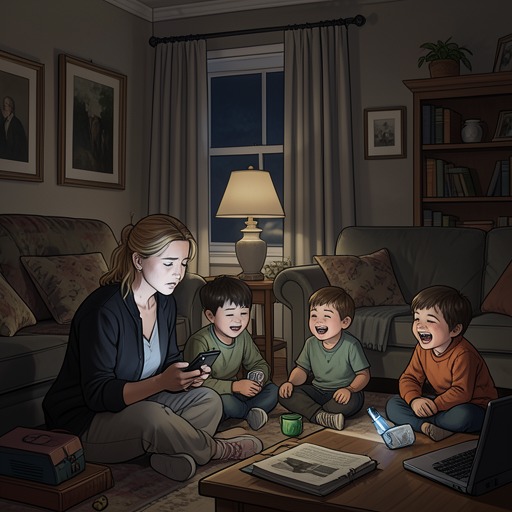
The messages exchanged during that separation make the task seem both ordinary and precarious. Will reports that Nora has announced a four o’clock curfew, asks whether that is true, and mentions that she has broken the front door. He also notices the clogged shower drain caused by her hair. These household details give the arrangement its unvarnished scale: Will is not shown making grand declarations, but is dealing with the small disorder and supervision that accompany looking after a teenager. His willingness to stay is part of what makes Yolandi’s absence possible.
Staying connected across distance
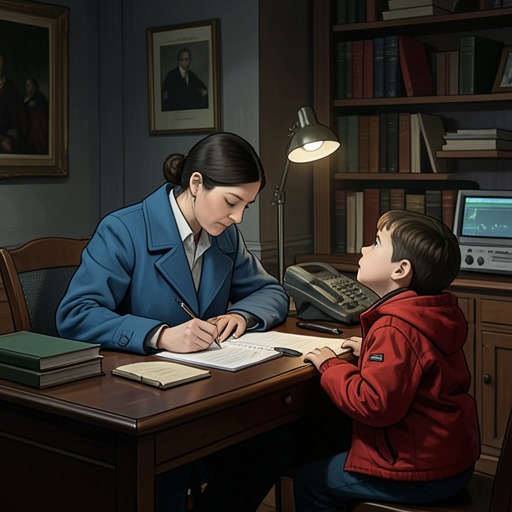
Will remains attentive to Elfrieda even while he is away from the hospital and family home. In his message to Yolandi, he asks her to embrace Elfrieda on his behalf. After returning to New York, he says he is looking forward to seeing Elfrieda and Nic in the summer. His concern is conveyed in short, repeated inquiries rather than in an extended account of his own feelings: when Yolandi calls him in Brooklyn, he asks how Elfrieda is doing, and the two speak quietly because he is in the library. Yolandi tells him that things are fine, even though neither sibling’s illness can be made simple by that brief exchange.
His own living circumstances also surface in these communications. Will tells Yolandi that he has rats in his apartment. She suspects that her Toronto home has mice as well as ants, and the comparison turns the distance between mother and son into another domestic detail shared over the phone. His message about the rats also gives him an opening to ask after Elfrieda and say that he misses her. The everyday problem does not displace the crisis; it sits beside it, one more fact exchanged between family members trying to stay in contact.
Will’s relationship with his mother is similarly built from practical check-ins. Yolandi calls him while he is in the library or, at other times, involved in Occupy Wall Street. She does not tell him the truth about how things are going with Elfrieda, answering his questions with reassurance instead. The contrast between his direct concern and her guarded response shows the limits of what they can share at a distance. His questions establish that he wants information; her answers reveal that she is managing what she can disclose while carrying the uncertainty herself.
Returning to help
When Elfrieda is in intensive care, Will offers to return to Toronto to stay with Nora again. He is willing to take on the same responsibility while Yolandi remains in Winnipeg, but he also explains that he is due to start a landscaping job in Queens in a couple of weeks and cannot stay indefinitely. The offer is therefore both substantial and bounded. He can help his mother through a dangerous stretch, but his own education, work, and life away from home continue to impose limits.
His concern for Nora appears in a specifically sibling-shaped way. Alongside his offer to return, he asks Yolandi to encourage Nora to take better care of her living space. The request is not detached from the larger emergency: it concerns the child he has been asked to supervise while their mother is absent. At the same time, his practical attention to the state of the house echoes the earlier messages about the broken door and blocked drain. Care in this family often takes the form of noticing what needs attention and trying to make daily life manageable.
After Yolandi returns to Toronto, the household’s immediate disorder has changed. The ants are gone, Will has cleaned up, and he and Yolandi share Chinese takeout and watch part of the World Cup before Nora goes out with Anders. Yolandi then drives Will to the airport. The cleanup and meal do not resolve the crisis in Winnipeg, but they mark the brief period in which the three can occupy the same home and perform ordinary family routines together.
At the airport, their farewell becomes more openly emotional. Yolandi hugs Will for a long time, and he does not pull away. He asks whether she is all right, then tells her that she is a good mother. Yolandi’s tears come immediately; she answers by praising him as a good son. She also tells him that he is a good brother, and he holds her hand for several seconds before leaving. The exchange gives form to an affection that has otherwise travelled through arrangements, updates, and messages. His departure is calm and deliberate, and Yolandi watches each step through security, reading his composure as a possible sign of how much he has grown, while recognizing that appearances cannot settle what he feels.
Elfrieda’s death and the family’s response
When Elfrieda dies, Will does not answer Yolandi’s call on his cell phone. Yolandi contacts his father, Barry, in Manhattan and asks him to find Will and arrange for him to travel to Winnipeg immediately. Barry agrees to leave work and look for him at his landscaping job in Queens, and says he will pay for the ticket. The sequence shows how Will’s family mobilizes around the news: Yolandi cannot reach her son directly, so his father becomes the link that can bring him to the family.
Barry also recalls having known Elfrieda and speaks of her kindness and force of character. His grief on the phone connects Will’s arrival to a loss that reaches beyond the siblings and their mother. Will then arrives by cab at Nic and Elfrieda’s home. He spends a long time alone in the bathroom, crying. The account does not make his grief public or explanatory; it records his withdrawal and the time he takes to mourn privately before rejoining the others.
Later, the family gathers in the living room, still wearing the clothes Yolandi and Nora had worn while playing tennis. Will has arrived and joins the conversation about Elfrieda’s last day. Nic describes taking her home from the hospital, sharing a normal lunch, and leaving briefly to collect books she had requested. Will asks which books Elfrieda wanted. When Nic names D. H. Lawrence, Shelley, and Wordsworth, the question brings the books into the family’s account of her final hours. Will’s participation is quiet but attentive: he helps the others reconstruct what happened, asking for the details that give their loss a particular shape.
Narrative role
Will’s role is defined less by a separate plot line than by the repeated ways the crisis alters his place in the family. He leaves his studies to care for Nora, returns when further help is needed, and comes to Winnipeg after Elfrieda’s death. The evidence also preserves the limits of that support: he has classes, a job, and a life in New York, and he cannot remain indefinitely in Toronto. These limits do not diminish his care; they make it concrete as a series of offers, journeys, and temporary arrangements.
His appearances also create a counterpoint to Yolandi’s uncertainty. She is trying to protect Elfrieda while maintaining the lives of her children at a distance, sometimes responding to Will’s concern with reassurance rather than the full truth. Will, meanwhile, asks about his aunt, looks after Nora, and later offers his mother affection without requiring her to hide her tears. Through him, the novel shows family care passing between generations in small acts: staying in a house, cleaning it, making a call, holding a hand, and arriving when grief makes the usual distance untenable.